Which San Diego Whale Watching Tour Is Right for You?
| Tour | Duration | Group size | Best for | Rating | From | |
|---|---|---|---|---|---|---|
| 3 Hour Whale Watch Cruise | 3 hours | Large group | Budget travelers, first-timers | 4.5 | $34 | Check → |
| Whale Watching & Dolphin Cruise | 2–3 hours | Medium group | Families with children, dolphin lovers | 4.4 | $70 | Check → |
| City Cruises Whale and Dolphin Watching | 2–3 hours | Large group | Downtown visitors, convenience seekers | 4.2 | $77 | Check → |
| Historic Sailing Schooner | 2.5 hours | Medium group | Unique experiences, history enthusiasts | — | $85 | Check → |
| Luxury Vessel Whale & Dolphin Cruise | 3.5 hours | Small-medium group | Premium experience seekers, long tours | 4.9 | $76 | Check → |
Whale Species & Best Months in San Diego
| Species | January–March | April–June | July–September | October–December | Likelihood |
|---|---|---|---|---|---|
| Gray Whale | Peak | Departing | — | Arriving | ~95% Dec–Apr |
| Blue Whale | — | Arriving | Peak | Departing | ~60% Jun–Sep |
| Humpback Whale | Rare | Present | Common | Present | ~35% |
| Fin Whale | Rare | Rare | Present | Rare | ~10% |
| Common Dolphin | Common | Common | Common | Common | Very High |
What to Expect on the Day
Choose your departure point
San Diego has three departure areas: H&M Landing in Point Loma (tours t1, t2 — the traditional whale watching hub), the downtown Embarcadero near the Convention Center (t3 — City Cruises), and the Midway area near the aircraft carrier (t4 — historic schooner). All are within 15 minutes of central San Diego.
Exit San Diego Bay
Boats pass Point Loma — the headland at the tip of San Diego's peninsula — and enter open Pacific water. In winter, gray whales are often spotted before the boat clears the kelp beds. The Point Loma cliffs and Cabrillo National Monument are visible to the north.
Gray whale encounters (December–April)
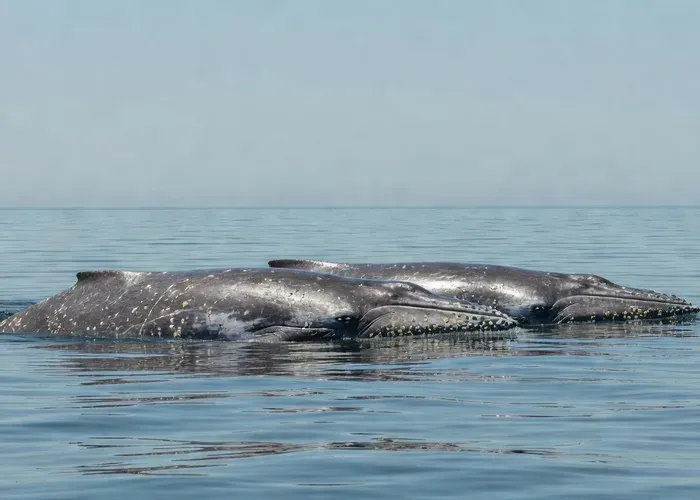
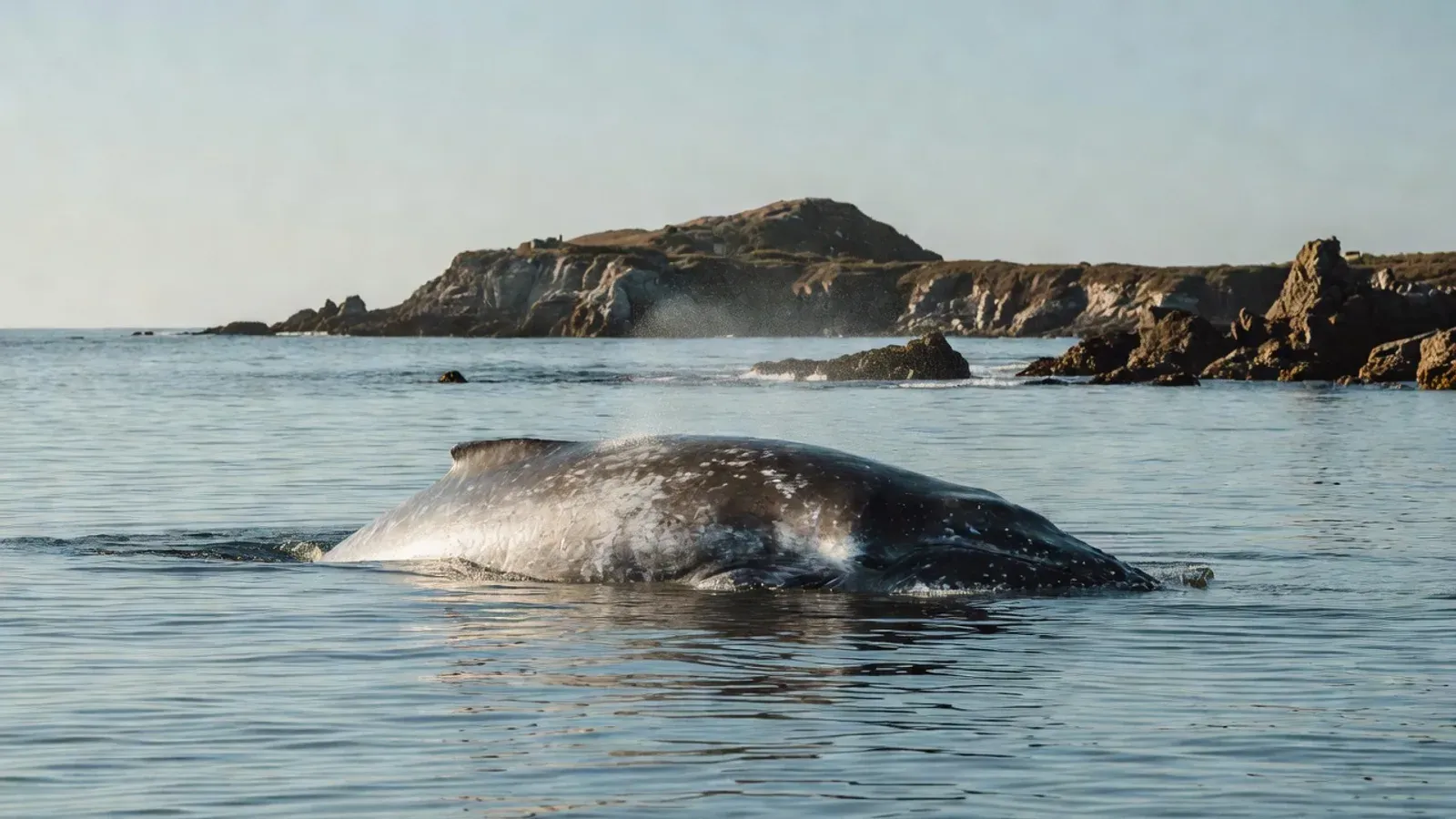
Gray whales migrate within 1–3 miles of the San Diego coastline, making this some of the closest whale watching to shore in the United States. Mothers with calves are common in February–March. Gray whales surface every 3–5 minutes and are easy to spot.
Blue whale encounters (June–September)
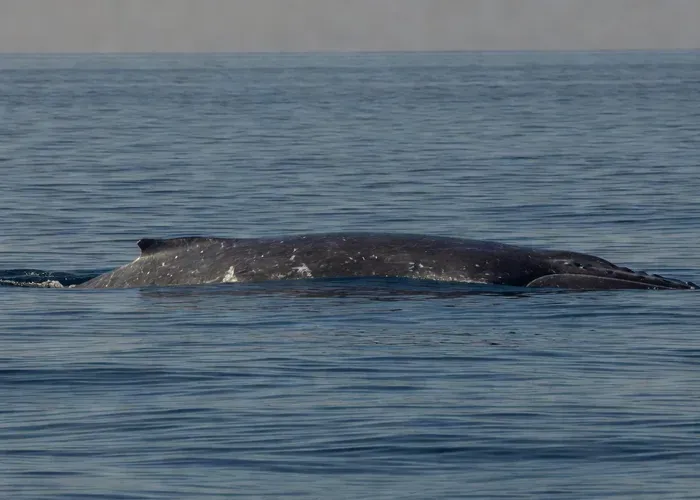
Blue whale tours head 5–20 miles offshore toward the underwater canyon systems. A blue whale surfacing alongside your boat — at 80–100 feet, the largest living thing on Earth — is a perspective-shifting experience. The tall columnar blow (30 feet high) is visible from a mile away.
Dolphin super-pods
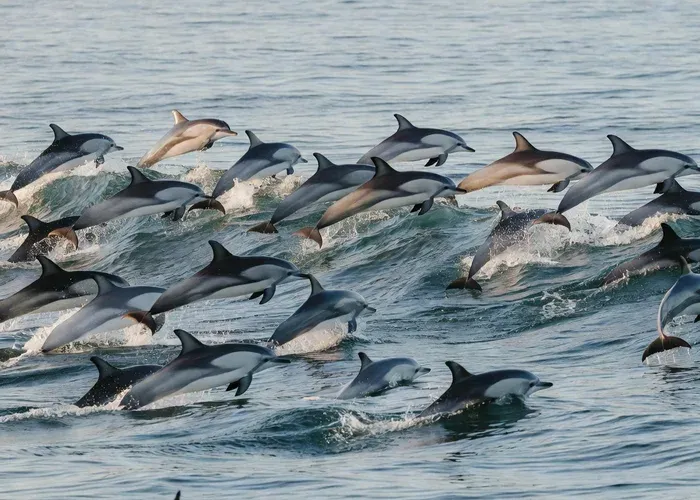
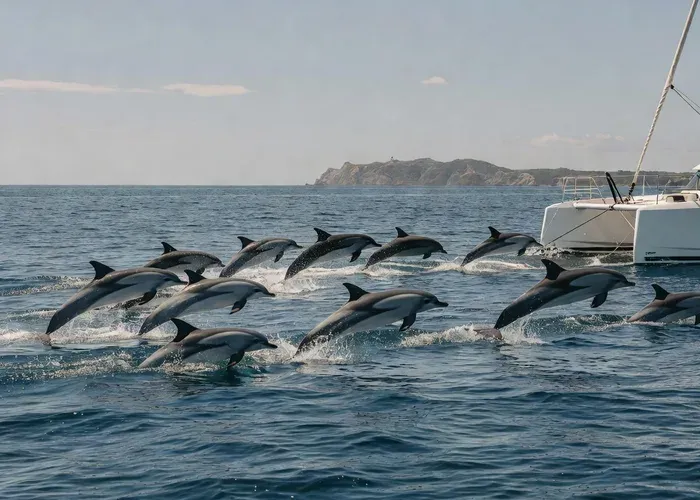
Common dolphin pods of 200–1,000 animals are a near-constant feature of San Diego offshore waters year-round. Naturalists often ask the captain to slow so passengers can watch dolphins surf the bow wave for extended periods.
What to Bring — and What to Leave at Home
✓ Bring
- Light jacket (San Diego is warm, but ocean air is cooler than shore)
- Sunscreen and sunglasses
- Camera with zoom lens
- Binoculars
- Motion sickness medication if prone
✗ Leave at home
- Heavy winter clothing
- Pets
Where Tours Depart From
| Port / Area | Details |
|---|---|
| H&M Landing — Point Loma | 2803 Emerson St, San Diego. The traditional San Diego whale watching hub since the 1950s. Tours t1 and t2 depart here. Free parking in the lot. Accessible via bus or Uber — 15 minutes from downtown. |
| Downtown Embarcadero | 1450 Harbor Island Dr / Convention Center area. City Cruises (t3) departs from the downtown waterfront. Walking distance from the Gaslamp Quarter and trolley stations. Paid parking in the Convention Center garages. |
| Maritime Museum Dock | 1492 N Harbor Dr, San Diego. The historic schooner tour (t4) departs from the Maritime Museum dock near the USS Midway. Street parking and paid lots nearby. Close to Little Italy. |
How to Choose an Ethical Tour
What ethical operators do
- Maintain 100-yard minimum from gray and blue whales (NOAA regulations)
- Support operators with NOAA whale watch permits
- Report sightings to Whale Alert app to help researchers track migrations
- Choose tours with certified naturalists on board
Red flags to avoid
- Operators that approach within 100 yards of whales
- Tours without any naturalist or educational component
- Using underwater sound devices near cetaceans