Which Cabo San Lucas Whale Watching Tour Is Right for You?
| Tour | Duration | Group size | Best for | Rating | From | |
|---|---|---|---|---|---|---|
| Small Group with Biologist | 2–3 hrs | Under 20 | First-timers, families | 5 | $109 | Check → |
| Zodiac Whale Watch | 2–3 hrs | Small group | Photographers, thrill-seekers | — | $109 | Check → |
| Sunrise Whale Watching | 2–3 hrs | Small group | Photography, wildlife enthusiasts | — | $141 | Check → |
| Max-12 Humpback Tour | 2–3 hrs | Max 12 | Couples, families, depth seekers | 5 | $99 | Check → |
| Hydrophone Pirate Ship | 2–3 hrs | Small group | Unique experience seekers | 4.9 | $125 | Check → |
Whale Species & Best Months in Cabo San Lucas
| Species | January–March | April–June | July–September | October–December | Likelihood |
|---|---|---|---|---|---|
| Humpback Whale | Peak | Departing | — | Arriving | ~95% Dec–Apr |
| Whale Calf | Common | Rare | — | — | ~60% Jan–Mar |
| Common Dolphin | Common | Common | Common | Common | Very High |
| California Sea Lion | Common | Common | Common | Common | Very High |
What to Expect on the Day
Depart Cabo Marina
All tours depart from the Cabo San Lucas Marina — a short walk from most hotels and the town centre. Check your booking confirmation for the exact dock (Marina docks vary by operator). Arrive 15–20 minutes before departure. The Marina itself is worth exploring: California sea lions haul out on the dock platforms year-round.
Pass the Arch of Cabo San Lucas
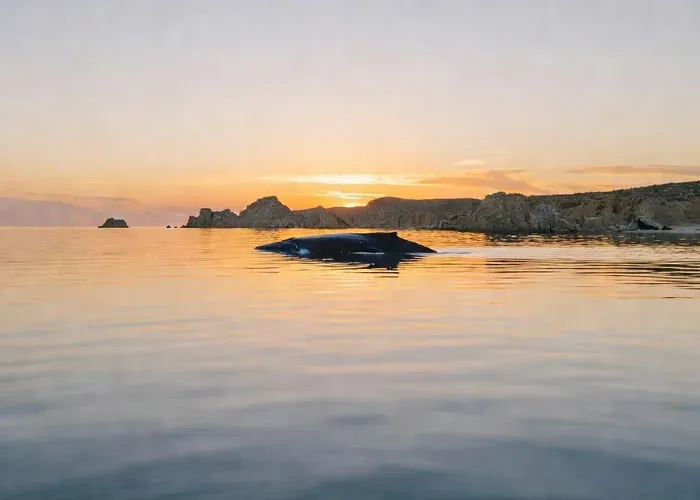
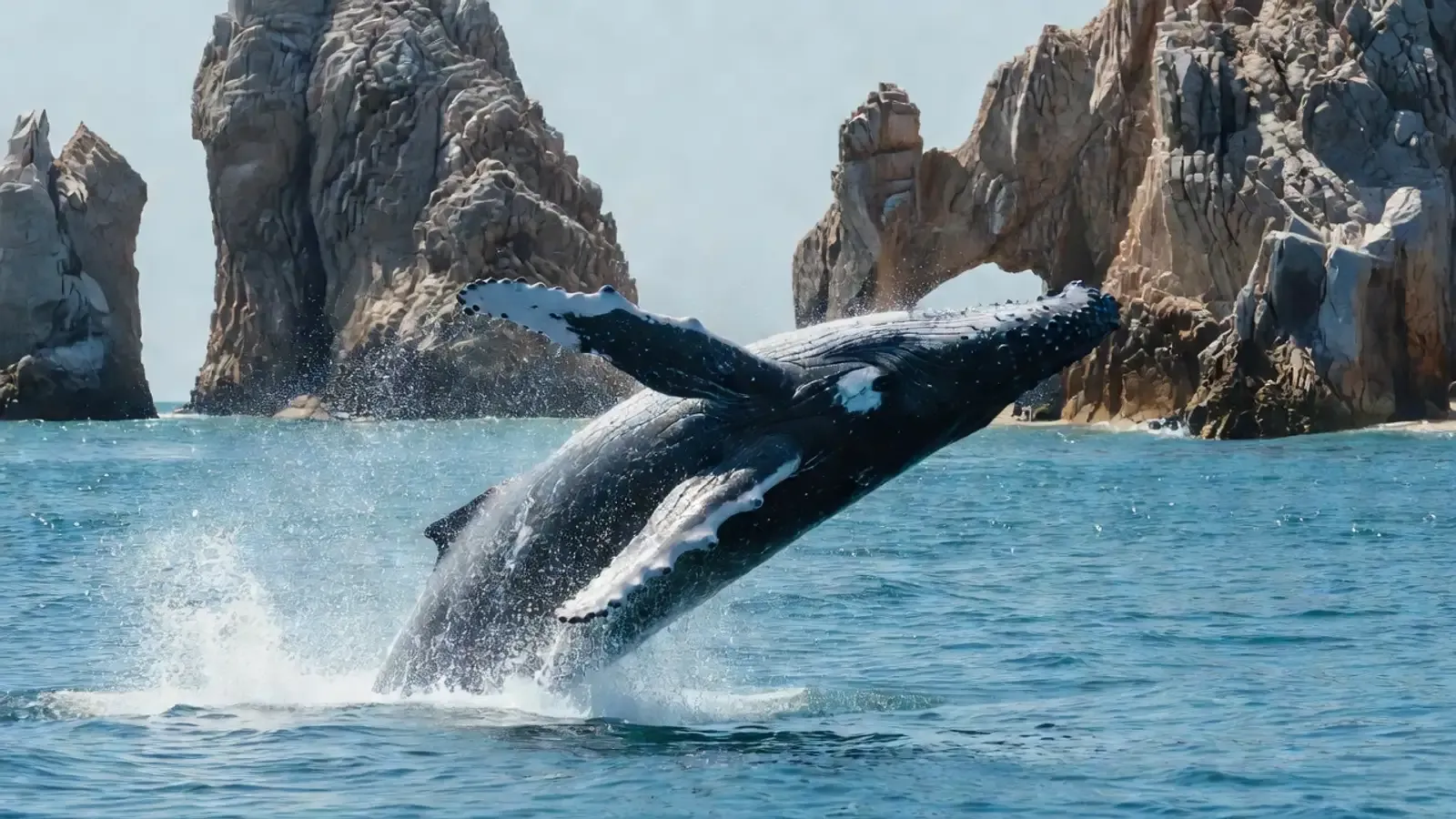
The Arch — El Arco — is a natural stone arch at Land's End where the Pacific Ocean meets the Sea of Cortez. Every whale watching tour passes it at close range. The contrast of the dramatic rock formation, the turquoise water, and whale spouts in the same frame makes Cabo unlike any other whale watching destination in the world.
Entering the humpback nursery
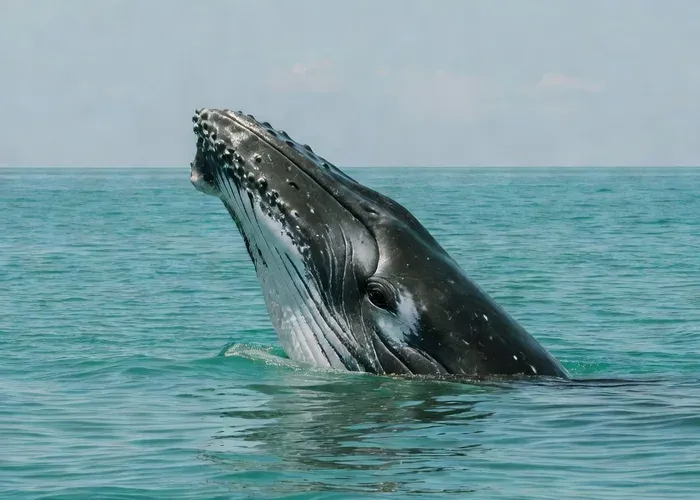
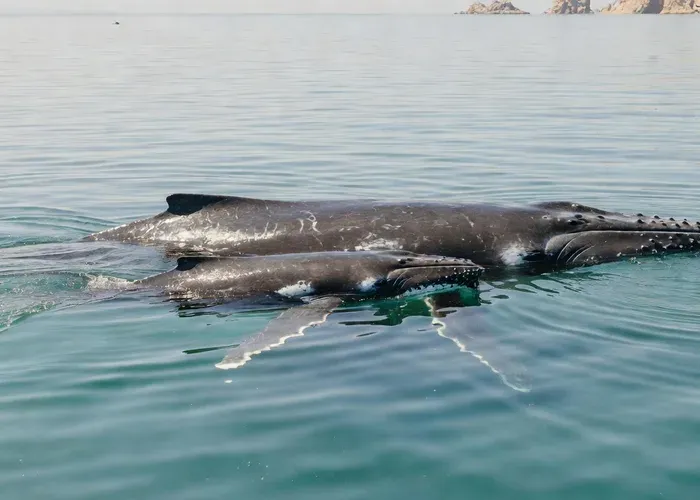
The sheltered waters south and east of the Arch are where humpback mothers rest and nurse calves December through April. Calm-water humpbacks behave very differently from feeding whales elsewhere — they are slow, deliberate, and spend long periods at the surface. Mothers are protective but not aggressive; calves are endlessly curious.
Humpback encounters
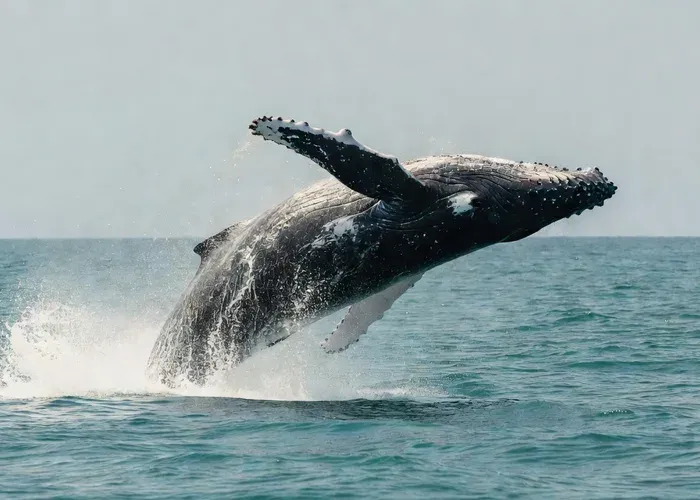
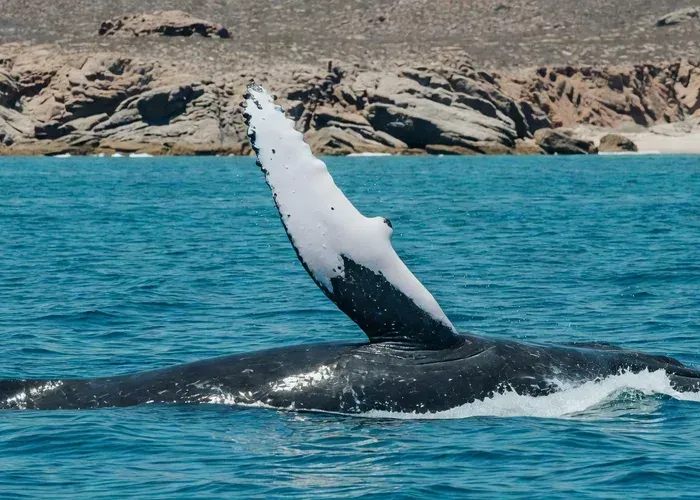
Humpbacks in Cabo are within 100 yards of the boat on most tours. Males sing — complex, repetitive breeding songs audible underwater and occasionally even through the hull. On the Hear the Whales tour, a hydrophone is lowered to capture this song live. Breaching, pec-slapping, and lob-tailing are regular behaviours in the active January–March period.
Return to Marina
The return passes the sea lion colony at Land's End rock — hundreds of California sea lions hauled out within metres of the boat. Pelicans, frigatebirds, and blue-footed boobies circle overhead. The Arch at sunset on an afternoon tour is one of the great images of a Cabo visit.
What to Bring — and What to Leave at Home
✓ Bring
- Sunscreen (SPF 50+ — Baja sun is intense year-round)
- Light layers — mornings on the water are cooler than shore
- Camera or waterproof phone case
- Binoculars
- Sunglasses
- Seasickness medication if prone (usually not needed in Cabo's calm bay)
✗ Leave at home
- Heavy clothing — Cabo is warm and sunny December–April
- Pets
Where Tours Depart From
| Port / Area | Details |
|---|---|
| Cabo San Lucas Marina | Marina Cabo San Lucas, Cabo San Lucas, BCS 23450, Mexico. Exact dock confirmed in your Viator booking confirmation. The Marina is walkable from the town centre and all beachfront hotels. Taxi from the hotel zone to the Marina: 5–10 minutes. |
How to Choose an Ethical Tour
What ethical operators do
- Maintain 50-metre minimum from humpback mother-calf pairs (Mexican federal law)
- Avoid touching or feeding sea lions at the Marina or Land's End
- Choose tours with certified marine biologists — their expertise is the biggest conservation contribution
- Report whale strandings or entanglements to SEMAR (Mexican Navy) or CONANP immediately
Red flags to avoid
- Operators that approach within 50 metres of mother-calf pairs
- Feeding sea lions or pelicans at the Marina
- Swimming near humpbacks — illegal in Mexican federal waters